Police investigation · 1998 investigation
How the Investigation Narrowed Around the Wrong Man
The first response, crime-scene work, broad suspect search, and investigative choices that eventually displaced the original description.
From the first response to suspect selection
The crime-scene response, recovered evidence, and original broadcast description are documented on the first-hours page. This page focuses on what investigators did next and how a broad inquiry narrowed around JJ despite the mismatch with the first descriptions and the absence of forensic evidence.
The command post
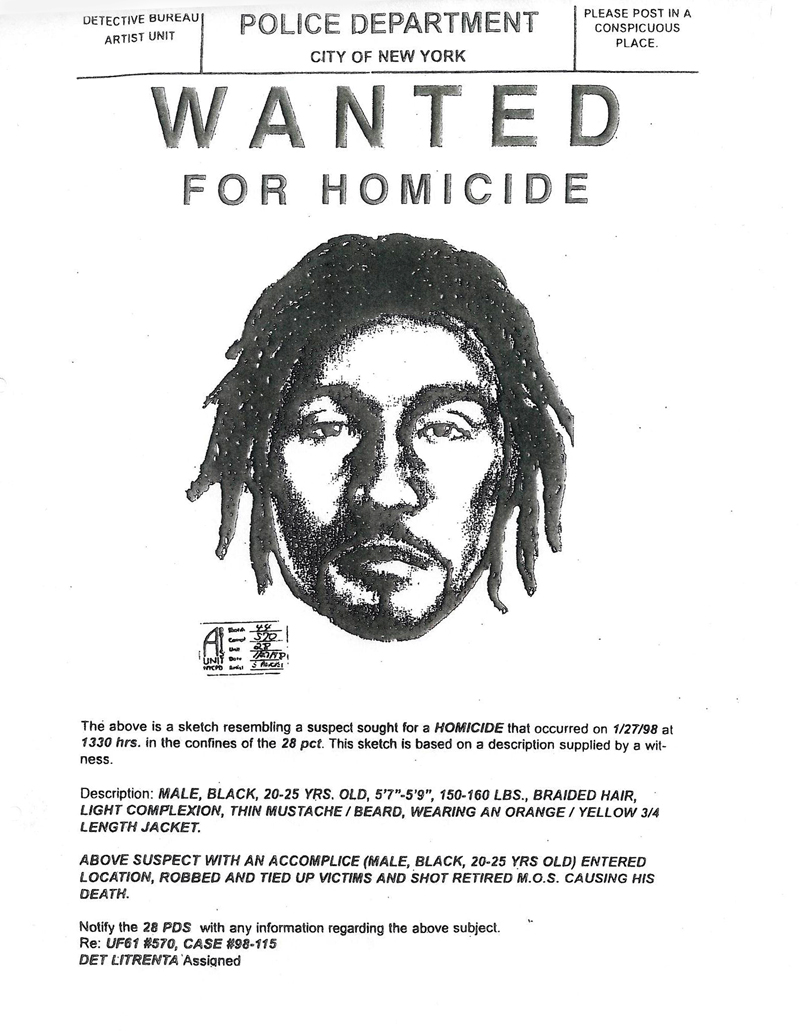
Because retired NYPD officer Albert Ward had been killed during a robbery inside the illegal Harlem gambling joint he operated, the NYPD created a field command post and deployed a substantial number of supervisors and officers. They interviewed witnesses, canvassed hospitals, made arrests on unrelated activity, and searched for people matching the wanted poster.
Names in the record: what can and cannot be concluded
Police examined similar robberies at other illegal numbers operations. One witness identified Derry Daniels as the darker-skinned robber. Daniels was arrested and later pleaded guilty to robbery; he did not name JJ during his first interrogation. Police records also documented tips naming “Mustafa,” “Shaq,” and Victor Gibson. The Manhattan District Attorney’s 2024 release and the National Registry of Exonerations use the name “Tee”. This site also links the variant spelling “Tea” to this note for clarity. The 2016 appellate opinion separately discussed tips about a person called “PT,” nicknamed “Mustafa,” and a later allegation involving “Moustapha D.” No published ruling established that Tee, PT/“Mustafa,” and “Moustapha D.” were the same person—or that any named alternate suspect killed Albert Ward. The defense argued that investigators did not pursue alternate leads adequately; the courts did not identify an alternate shooter.
The leads came from different sources. A neighborhood resident told police the composite resembled a man known as “Mustafa,” and another person supplied similar information. Anonymous callers later named Victor Gibson and a person called “Shaq.” The 2016 appellate opinion confirms that these tips existed while rejecting the defense claim that the alternate-suspect proof then offered warranted a new trial. That distinction matters: a documented lead is not a judicial finding that the person named was the shooter.
The pivot to JJ
Three days after the crime, Augustus Brown was questioned and shown hundreds of arrest photographs. After many hours he selected JJ, while also saying he recognized him from the neighborhood and had not seen him for years. Before viewing the photographs, Brown had described the shooter as Black and had not said he recognized either robber.
Brown’s search was unusually broad. The National Registry of Exonerations reports that he reviewed about 1,800 photographs before choosing JJ’s image and remarked that the eyes looked different. Another witness, Robert Jones, had already reviewed more than 500 white or Hispanic photographs without identifying anyone. JJ’s arrest photograph was catalogued as White/Hispanic, even though the wanted poster described a light-skinned Black man with facial hair and braids.
That selection became the bridge from a description that did not match JJ to a photo array and lineup centered on him. The defense later argued that once police treated JJ as the suspect, contrary evidence and alternate leads received less attention.
A lineup built around the selection
On February 2, 1998, JJ voluntarily appeared with counsel. The six-person lineup placed him with five fillers who did not reproduce the race-and-hair combination in the first descriptions. Some viewers selected JJ, while others selected no one or gave qualified responses. The procedures and each witness’s result are separated on the eyewitness record page because collapsing every response into the word “identified” conceals important differences.
Defense filings and the 2024 expert review identified a cumulative set of concerns: the extensive mugshot search, the mismatch between JJ and the original description, lineup fillers that did not match that description, possible reinforcing feedback, and reduced attention to alternate leads. The 2016 court rejected the claims then before it; the later DNA result materially changed the record. Later litigation also disputed whether a police report relating to an alternate lead had been properly disclosed. Prosecutors contested the Brady claim, and no published decision located for this archive established a Brady violation; the post-conviction page preserves both positions.
The official 2016 appellate opinion confirms that police had received tips naming “Mustafa” and “Shaq” and records the court’s rejection of the alternate-suspect arguments then before it. For general legal context, the U.S. Department of Justice identifies grossly dissimilar fillers and other suggestive practices in its lineup due-process guidance.